Decoding Self-Sabotage
Dec 26, 2023
Ah! Our actions, and not just our grief,
Impede us on life’s journey.
(Goethe. Faust)
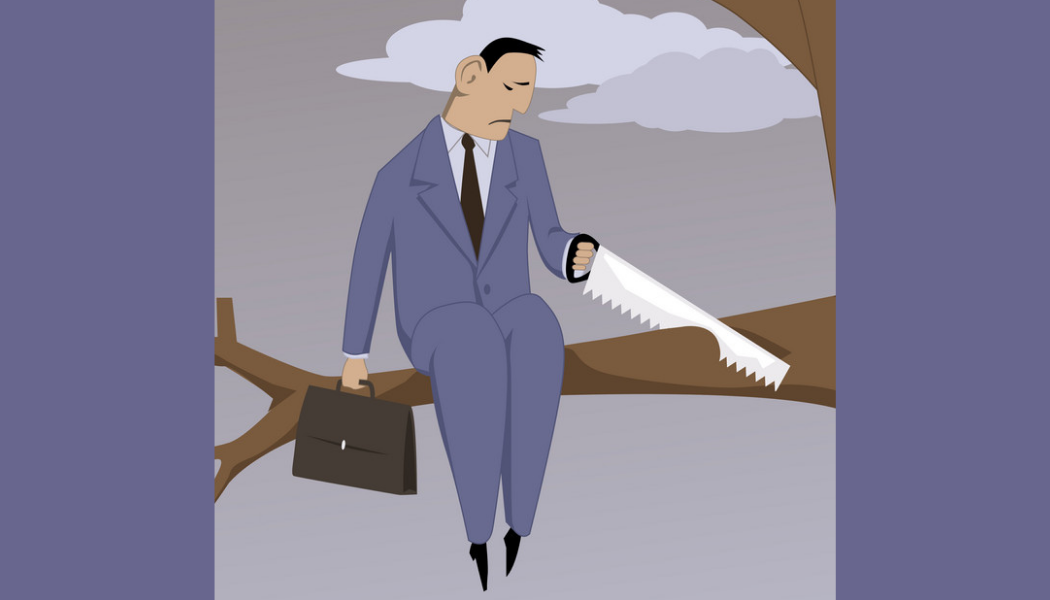
The concept of self-sabotage is widely recognized as a behavioral pattern where an individual acts in ways that are counterintuitive to their own best interests, often preventing them from achieving their goals. What is less commonly known is the origin of this term in clinical practice. It was introduced by William Ronald Dodds Fairbairn, a British psychiatrist and psychoanalyst who lived from 1889 to 1964.
Fairbairn was an adherent of Sigmund Freud’s Object Relations Theory, and his work in this area significantly contributed to our understanding of such self-defeating behaviors. His exploration of self-sabotage was a crucial development in psychoanalytic thought, shedding light on the complex internal dynamics that lead individuals to undermine their own success and well-being.
Interestingly, the term “self-sabotage” can be interpreted as “inner saboteur” or “inner wrecker”. This perspective shifts the understanding of self-sabotage from merely a passive resistance to positive changes to an active, almost aggressive stance against one’s own aspirations, dreams, goals, and plans. It suggests that part of the psyche actively works to undermine or destroy personal progress or success.
The concept of the “inner saboteur” represents a part of ourselves that paradoxically works against another integral aspect of our being: the part that craves and values relationships. This internal conflict can manifest in various self-destructive behaviors and attitudes that impede our ability to form and maintain healthy relationships, both with ourselves and with others. These manifestations include:
- Avoidance: Evading situations or tasks that may be beneficial or necessary
- Self-Isolation: Withdrawing from social interactions and relationships
- Procrastination: Delaying important tasks or decisions
- Self-Criticism: Engaging in harsh, negative self-evaluation
- Self-Neglect: Ignoring personal needs, health, and well-being
- Refusal to Care for Self-Relationships: Not investing in one’s own personal growth or self-understanding
- Addiction: Turning to substances or behaviors that temporarily mask underlying issues
- Overeating: Using food as a coping mechanism for emotional distress
- Self-Harm and Self-Punishment: Inflicting physical harm or punitive measures on oneself
The “inner saboteur” functions in several ways that undermine personal growth and well-being, each representing a different aspect of self-sabotage:
- Resistance to Change and Activity: It maintains the status quo by preventing any actions or changes, thereby safeguarding the individual from the uncertainties and risks of the unknown. This resistance can manifest as inertia, a lack of motivation, or a fear of stepping out of one’s comfort zone.
- Engaging in Detrimental Mental Activities: The inner saboteur often engages in unproductive and harmful mental processes. This includes constant doubting, excessive rumination, and persistent thoughts like “why did this happen to me?” Such mental activities drain emotional and cognitive resources, leading to exhaustion and a sense of helplessness.
- Preference for Predictable Solutions: It encourages the individual to opt for the safer, more predictable options (“a bird in the hand”), often at the expense of potentially better opportunities (“two in the bush”). This preference for the familiar and predictable can result in missed opportunities, stifled personal growth, and a reluctance to take risks or embrace change.
The “inner saboteur” is an enemy of hope and growth, and aims to suppress the healthy part of our personality that seeks connection. It is no coincidence that the “inner saboteur” often appears in personal, close relationships, be it ignoring outreach from others, forgetting about a meeting, being late, instigating unprovoked quarrels and conflicts, breaking off relationships, etc.
The “inner saboteur” can subconsciously manifest in behavior which can be noticed retrospectively post-factum. Conversely, on other occasions, it can be expressed quite clearly and consciously as an internal voice, generating pessimism, low self-esteem, and negative emotions, which prevents the addressing of life challenges.
How do we identify and prevent the activity of the “internal saboteur”?
- Look back at your life path — for example, think of your actions over the past year from the perspective of self-sabotage.
- Ask a friend you trust if they have ever noticed self-sabotage in your behavior and choices.
- Analyze #1 and #2. Are there any patterns or coincidences?
- Listen to yourself. Learn to recognize the voice of the “inner saboteur” (“inner wrecker”). It happens very often that this voice is trying to protect us from disappointment and failure in the future. Fear of success is another signature of the “inner saboteur.”
- Give your “inner saboteur” a name — ideally a humorous one. This name will help to separate it from yourself. For example, when it whispers into your ear, trying to postpone your activity, you might sarcastically say, “Hi! I haven’t heard from you for a while. I missed you. What would be your advice?”
- Take a sheet of paper, colored pencils or markers and draw a portrait of your “inner saboteur”.
- To counteract the influence of the “inner saboteur” and emerge from isolation, it’s beneficial to actively engage in building relationships with others. A key aspect of this process involves opening up about your experiences with self-sabotage with others, and encouraging them to share their related struggles. These discussions can be a significant step towards understanding and overcoming this aspect of your personality.
Q-Medical / D.Avtonomov©
