Jun 29, 2026
Why We Keep Moving Without Certainty
Hope is often misunderstood because people ask it to do the work of certainty.
They want it to reassure them, to soften fear, to promise that effort will be rewarded and pain will eventually make sense. They want some sign that what lies ahead will justify what has already been endured. But it does not always arrive with those comforts. In many lives, it appears in a more modest and demanding form: the willingness to continue before resolution has been
promised.
It is not certainty in disguise. It does not require guarantees, favorable odds, or even a clear image of what lies ahead. The future is rarely clear enough for that. Outcomes remain unsettled. Loss remains possible. The road ahead does not become fully illuminated just because the mind has stopped fighting what is already here.
What it offers is not proof, but permission to remain in motion.
This makes it harder to trust than optimism, at least when optimism is understood as brightness or favorable expectation. It does not depend on feeling good about the future. It does not ask the
mind to deny risk, ignore grief, or pretend that disappointment is unlikely. It simply refuses to make darkness the only thing worth believing in.
It does not need pessimism to disappear. It needs pessimism to remain in conversation with something else. A certain kind of pessimism can be useful. It sees danger, registers loss, and refuses to soften what should be taken seriously. But when pessimism stands alone, the future can begin to feel closed rather than uncertain. Concern turns inward, imagination narrows, and the mind mistakes vigilance for wisdom and paralysis for realism.
Hope does not argue against reality. It keeps reality from becoming the end of the story.
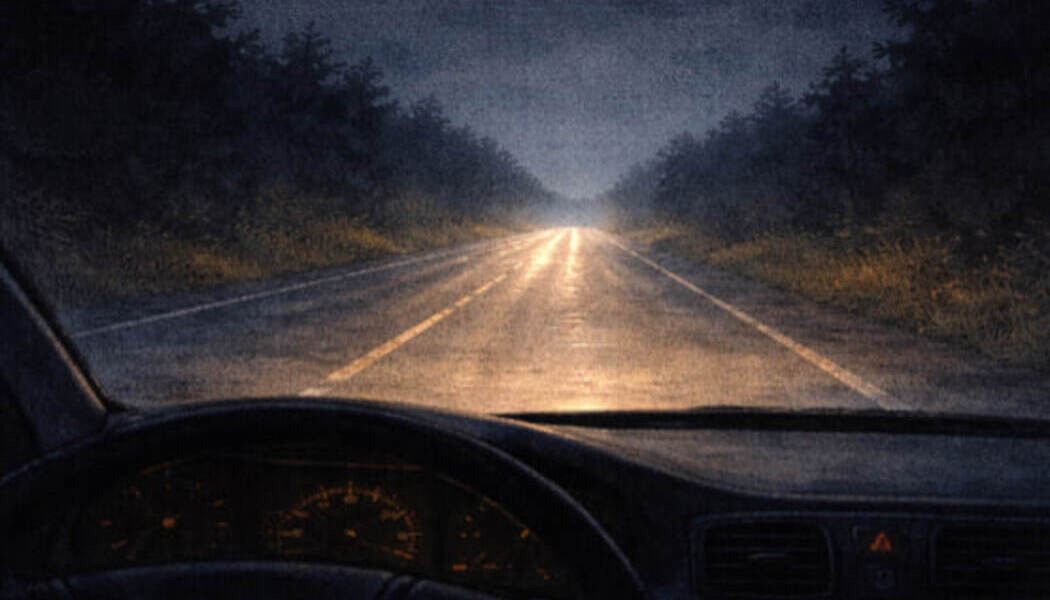
It can resemble driving at night beyond the reach of the headlights. The distance remains hidden. The destination is not fully visible. Only a small portion of the road appears at any given moment. Yet movement continues anyway, not because everything ahead has been revealed, but because enough is visible to keep going. It does not illuminate the whole future. It makes continuation possible in limited light.
That limited light matters because life is rarely lived under conditions of certainty. The most important choices are made long before outcomes are known. Relationships are entered without guarantees. Work is done without assurance of recognition. Love is offered without control over what will be returned. Healing begins before there is proof that healing will hold. Much of life depends on moving within conditions that cannot be mastered in advance.
Uncertainty is not resolved. It is answered differently.
What many people fear about hope is exposure. To hope is to risk disappointment. To hope is to risk looking naïve. To hope is to risk being hurt by what does not happen, or by what happens differently from what was imagined. For some, hopelessness can begin to feel safer because it appears to reduce vulnerability. Expect less, and less can wound. Want less, and less can be
taken.
But that safety comes at a cost.
A life organized entirely around avoiding disappointment eventually begins to resemble a life organized around withholding participation. Hopelessness may protect against certain forms of pain, but it also narrows what can be loved, attempted, imagined, or endured. The mind that expects nothing may avoid certain injuries, but it risks becoming estranged from possibility itself.
Possibility reopens, though never without tension.
It does not insist that everything will turn out well. It does not require confidence that the ending will be kind. It simply recognizes that what has not yet happened is still unfinished. A situation may remain uncertain. A relationship may remain unresolved. A future may remain obscured. Yet obscurity is not the same as absence, and uncertainty is not the same as closure.
It keeps the mind from mistaking incompleteness for finality.
By this point in the sequence, it has been earned the hard way. It does not appear because avoidance worked, or because control succeeded, or because awareness immediately changed everything. It does not arrive because effort forced transformation, or because acceptance erased difficulty. It appears after each of those responses has revealed both its usefulness and its limit.
Hope can enter once force no longer fills the room.
When it enters, it rarely announces itself. A little more future than the mind had allowed a moment earlier. A readiness to continue. A refusal to collapse meaning into what is presently visible. These shifts can seem modest, but they matter because they alter direction. They keep life from closing too early around what is still becoming.
It does not become strongest when the future is secure. It becomes strongest when security is no longer available and movement continues anyway. Under those conditions, it is no longer borrowed from circumstance. It becomes something more internal, more chosen, and in some ways more honest. It is no longer based on confidence that things will work out. It is based on the recognition that life remains unfinished, and that unfinished things still deserve participation.
Here, hope and realism can finally stop competing. Fear may still warn. Grief may still clarify. Doubt may still ask its questions. None of these cancels it. They give it something real to stand beside. Hope without reality becomes fantasy. Reality without hope becomes enclosure. Together, they create a way of facing uncertainty without either denying it or surrendering entirely to it.
It is not passive. It does not sit back and wait for reality to improve on its own. It remains in relation to what is possible, even while acknowledging that possibility may not become an outcome. It acts, writes, reaches, loves, begins again, and continues. Not because it has been promised success, but because it refuses to make certainty the price of engagement.
The paradox of hope is that it becomes most necessary when certainty is least available.
And in that uncertainty, something still remains… Not proof, not a promise, but enough light to keep going.
Brindley Burke,
Harvard Extension School

Jun 25, 2026
Acceptance does not remove pain. It removes the added strain of fighting the presence of pain. It does not erase difficulty. It alters the relationship to difficulty.
Learn More
Jun 22, 2026
Awareness brings clarity, but not necessarily the ability to act. What feels like progress is often the beginning of a different kind of process, not its completion.
Learn More
Jun 18, 2026
The more energy devoted to managing outcomes, the more sensitive the system becomes to unpredictability. Small uncertainties begin to loom larger. Decisions carry added weight.
Learn More